OpeN9 Market
The Challenge
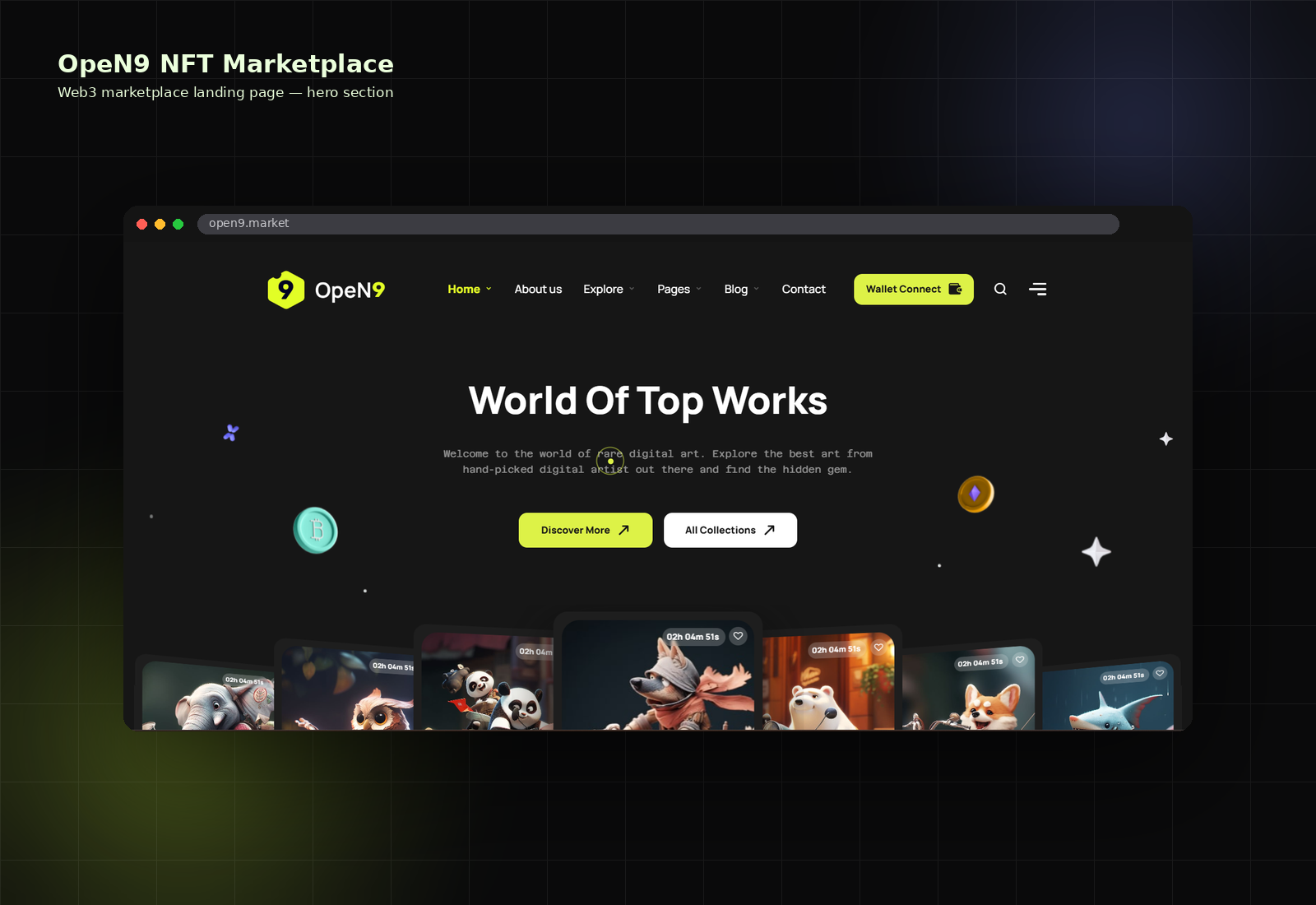
OpeN9 is a Web3 marketplace connecting independent digital artists with collectors through NFT-gated auctions and fixed-price listings. The client had a functioning smart contract on Polygon but needed a frontend that didn't feel like every other OpenSea clone — something fast, accessible, and built to scale.
I architected the app on Next.js with server-side rendering for listing pages, indexed on-chain events via The Graph, and built a wallet-connect flow that handles three different providers without interrupting the browse experience.
Architecture & Stack
The most complex piece was the transaction pipeline — bidders, sellers, and the escrow contract all need to stay in sync in near real-time. I built a background worker that polls finalized blocks, reconciles state in a Postgres cache layer, and pushes updates to the UI via WebSocket. This cut perceived latency on auction closes from 12–15 seconds to under two.
The UI leans on Tailwind and Framer Motion for micro-interactions — nothing heavy, just enough to make on-chain actions feel responsive and intentional. The whole app runs under a strict Content Security Policy and passes a third-party security audit without issues.
Outcome
Two weeks after launch, OpeN9 onboarded 140 verified artists and processed over $80k in primary sales. The client was able to pitch the platform to a second funding round using the live product as their proof of work. I continue to maintain the codebase and have since added support for Avalanche and Base, with the same component library serving all three chains from a single repo.
The project reinforced a principle I've come to trust: in Web3, frontend performance and transaction clarity aren't nice-to-haves — they're the difference between a user finishing a purchase or walking away mid-signature.